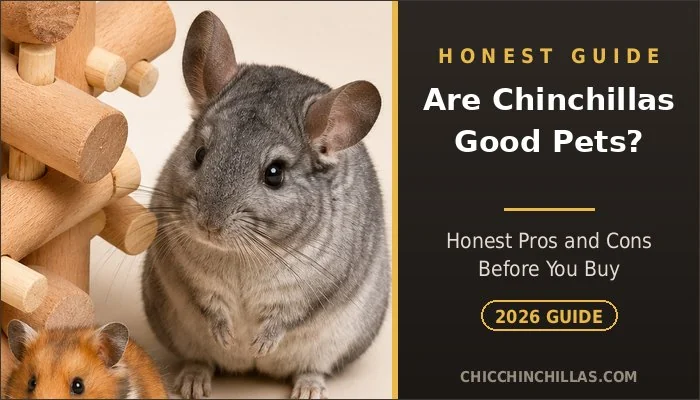
Yes, chinchillas are good pets for the right person: they are clean, nearly odorless, gentle, and can live 10 to 20 years. But they are the wrong pet for anyone wanting a cuddly animal for young children, a low commitment companion, or a pet that tolerates warm rooms. This guide lays out the honest pros and cons so you can decide which side you fall on.
I will not sugarcoat anything here. Chinchillas are wonderful animals, but roughly half the people who ask this question would honestly be happier with a different pet. Let us find out which half you are in.
Pros of Chinchillas as Pets
1. They Are Exceptionally Clean and Nearly Odorless
Among small pets, chinchillas are in a league of their own for cleanliness. Their droppings are dry, odorless pellets, their urine has a faint smell that good bedding absorbs easily, and the animals themselves have no body odor.
A well maintained chinchilla cage barely smells at all, something few hamster or ferret owners can claim. We break this down fully in do chinchillas smell?
2. They Live 10 to 20 Years
Most small pets break your heart quickly. Hamsters live two to three years, and rats around two. Chinchillas, with proper care, routinely reach 10 to 15 years and can pass 20.
If you want a small pet that becomes a genuine long term companion rather than a short chapter, chinchillas are one of the only options.
3. The Softest Fur of Any Pet on Earth
Chinchillas have the densest fur of any land mammal, with around 50 or more hairs growing from a single follicle. Touching one for the first time is genuinely surprising.
That dense coat is also why they carry almost no fleas or parasites; the fur is simply too thick for pests to live in.
4. Lower Dander Than Most Furry Pets
Chinchillas produce less dander than cats and dogs, which makes many allergy sufferers more comfortable around them. One honest caveat: their timothy hay and bath dust can trigger reactions in people with hay or dust allergies, so the setup can be a bigger allergy issue than the animal itself. If allergies are your concern, spend time around a chinchilla and its supplies before buying.
5. Quiet and Apartment Friendly
Chinchillas do not bark, screech, or squeak for attention. Beyond soft chirps and the occasional hop and thump in the cage, they are near silent pets, which makes them well suited to apartments and shared housing where a dog or parrot would cause problems.
6. Content Alone During Your Workday
A chinchilla does not suffer when you are at work. As long as it has hay, water, and safe things to chew, it will happily nap and potter around its cage all day, saving its energy for the evening.
Daily interaction and playtime still matter, but chinchillas do not need constant attention the way dogs do.
7. Entertaining, Intelligent Personalities
Chinchillas are smart, curious animals with distinct personalities. They learn routines, recognize their owners, can be taught to come when called, and their popcorn style jumping during playtime is famously entertaining. Give them the right chinchilla toys and a safe play area, and they will show you a surprising amount of character.
8. Their Active Hours Suit Working People
Chinchillas are crepuscular, meaning they are most active at dawn and dusk rather than at night or during the day. For anyone who works standard hours, this is nearly perfect: your chinchilla is waking up and ready to play right when you get home in the evening.
Cons of Chinchillas as Pets
1. They Cannot Tolerate Heat, Ever
This is the deal breaker most people do not see coming. That incredible fur means chinchillas overheat quickly, and temperatures above 75°F (24°C) put them at real risk of fatal heatstroke.
The room they live in must stay between 60 and 70°F (15 to 21°C) all year.
In warm climates, that means running air conditioning through summer, every summer, for the next 15 years. If you cannot guarantee that, do not get a chinchilla.
2. They Are Not Cuddly, Especially at First
Chinchillas are prey animals, and most do not enjoy being held or squeezed. Trust builds over months and sometimes years, and even a bonded chinchilla usually prefers sitting near you or on you over being carried around. If you or your children want a pet that likes hugs, a chinchilla will disappoint everyone involved, including the chinchilla.
3. Poorly Suited to Young Children
Between the no cuddling rule, their fragile ribs, their speed, and their fur slip defense, where a grabbed chinchilla releases a patch of fur to escape, chinchillas and small kids are a bad match. They are best for adults and calm teenagers who can handle them gently and respect their pace.
4. Real Startup Costs
The chinchilla itself might cost $80 to $400, depending on color, but the setup is where the money goes: a tall quality cage, wooden ledges, a hideout, a proper 15-inch exercise wheel, dust bath supplies, hay, and safe chew toys.
Expect $300 to $500 before the animal comes home. Our chinchilla cage setup ideas show what a proper setup involves.
5. Everything Gets Chewed
A chinchilla’s teeth grow continuously for its entire life, so chewing is not a habit, it is a biological requirement. Inside the cage, this is manageable with safe chew toys and hay.
Outside the cage, it means baseboards, wires, furniture, and shoes are all fair game, so playtime needs a chinchilla proofed room and your supervision every single time.
Skipping chew care also leads to expensive dental problems, which we cover in our chinchilla dental health guide.
6. Strict, Boring Diet They Cannot Cheat On
Chinchillas have extremely sensitive digestive systems. Their diet is unlimited timothy hay, a measured scoop of plain pellets, and water.
No fruit, no vegetables, no seeds, no table scraps, and almost none of the colorful treats sold in pet stores. Feeding the wrong thing does not just cause an upset stomach; it can cause serious, sometimes fatal digestive problems.
7. Vet Care Is Specialist Care
Chinchillas are exotic pets, and regular dog and cat vets often will not treat them. You need an exotic vet, who may be far from you and typically charges more per visit.
Chinchillas also instinctively hide illness, so by the time symptoms show, the problem is often advanced. Owners have to actively monitor eating, droppings, and energy levels.
8. 15 Year Commitment Most People Underestimate
The long lifespan sits in both columns. Ten to twenty years covers house moves, new jobs, new relationships, and children growing up and leaving.
A chinchilla bought for a 10 year old will likely still be alive when that child leaves for university, and someone will still need to keep that room at 70°F.
Think honestly about the next decade and a half before committing. If you are set on a young one, start with our baby chinchilla care guide.
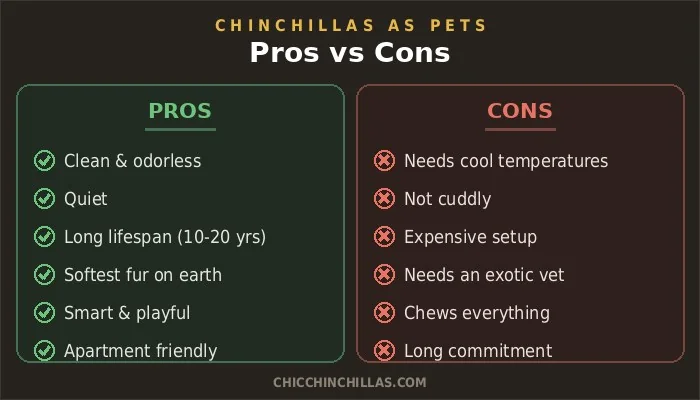
Pros and Cons Comparison Table
Who Should NOT Get a Chinchilla
A chinchilla is the wrong pet for you if any of these apply:
- You want a cuddly pet that enjoys being held from day one
- The pet is mainly for a child under 12
- You live somewhere hot and cannot run air conditioning constantly
- You want a pet that can free roam the house unsupervised
- You are not sure where you will be living in five years
- You want variety in feeding, treats, and food based bonding
None of these makes you a bad pet owner. They just mean a different animal will make both of you happier. If you are torn between small pets, our chinchilla vs guinea pig comparison is the logical next read, since guinea pigs suit families with children far better.
Who Chinchillas Are PERFECT For
On the other hand, a chinchilla might be your ideal pet if you are an adult or calm household, home in the evenings, living in a cool or climate controlled space, patient enough to earn an animal’s trust over months, and looking for a quiet, clean, long lived companion with real personality. Chinchilla owners tend to be devoted for a reason: once the trust is built, few small pets match them.
Quick Verdict
Chinchillas are genuinely good pets for adults who want a clean, quiet, long lived companion and can commit to cool temperatures and patient bonding.
They are genuinely bad pets for young children, hot homes, and anyone who wants a cuddly lap animal.
Very few pets are this clearly split, which is why knowing yourself matters more than knowing the animal here.
Final Thoughts
So, are chinchillas good pets? For the right owner, they are among the best small pets in existence: clean, quiet, soft beyond belief, full of personality, and around for a decade or two.
For the wrong owner, they are a 15 year commitment to a pet that will not cuddle, cannot handle heat, and chews everything it reaches.
Be honest about which owner you are. If the cons on this list made you hesitate, trust that hesitation.
If they made you nod and plan around them, a chinchilla will likely make you very happy, and you can start preparing with our cage setup and care guides.
Frequently Asked Questions
Are chinchillas good pets for kids?
Generally no. Chinchillas are fragile, fast, and dislike being grabbed, which is a poor combination with young children. They are better suited to adults and teenagers. For families with younger kids, a guinea pig is usually the better small pet choice.
Are chinchillas cuddly?
Not in the traditional sense. Most chinchillas dislike being held tightly but will happily climb on you, sit on your shoulder, and accept chin scratches once trust is built. Bonding can take months, and the affection is on the chinchilla’s terms.
Are chinchillas high maintenance?
Daily care is light: hay, water, and a quick check take minutes, plus dust baths two to three times a week and weekly cage cleaning. The demanding parts are the strict temperature control, the specialist vet care, and supervised playtime, not the daily routine.
Do chinchillas smell bad?
No. Chinchillas are among the least smelly pets you can own. Their droppings are dry and odorless, and the animals themselves have no body odor. Any noticeable smell almost always comes from a cage that needs cleaning.
Are chinchillas expensive to keep?
After the initial $300 to $500 setup, monthly costs are modest, mainly hay, pellets, dust, and chew toys. The hidden costs are air conditioning in warm climates and exotic vet visits, which cost more than standard vet care.