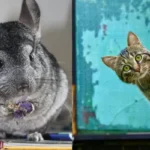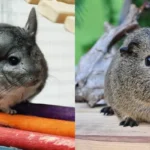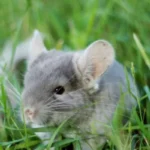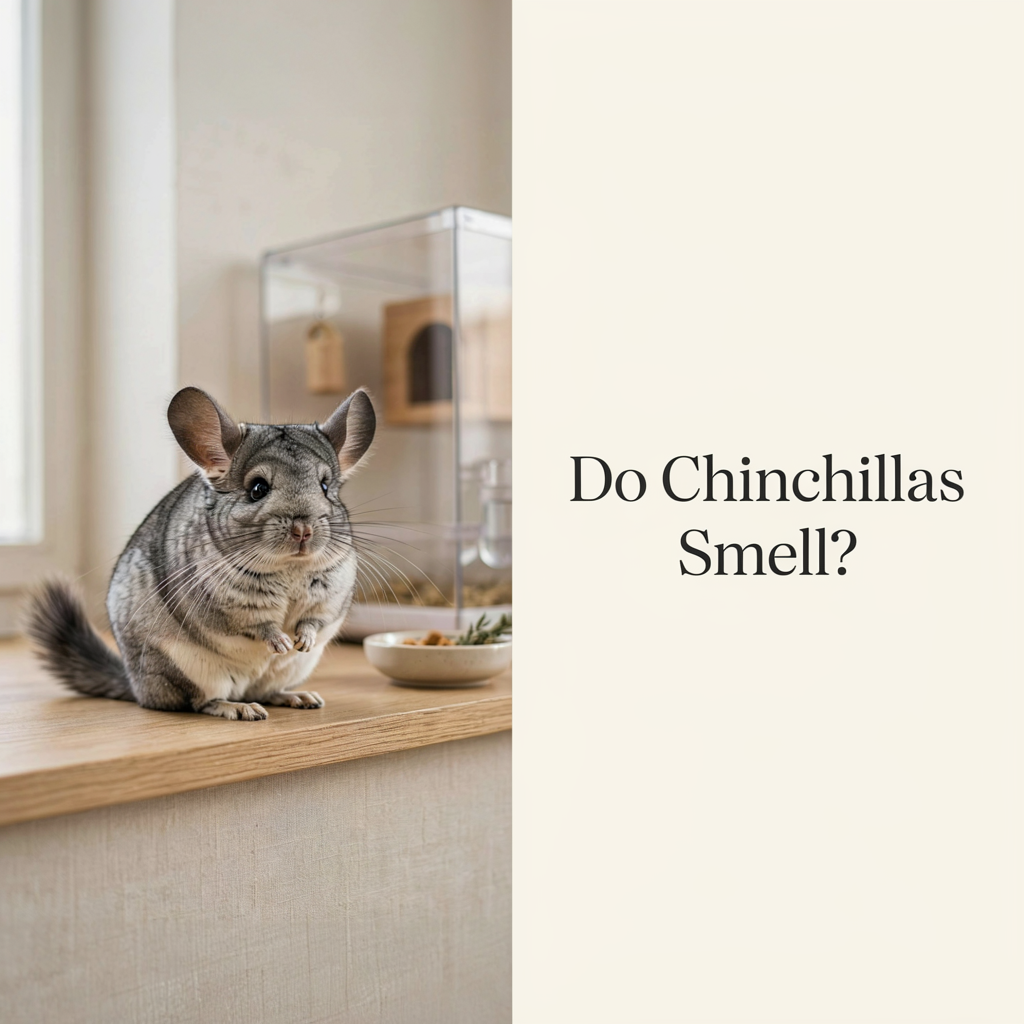
No, chinchillas do not smell. They are one of the least smelly pets you can own: their droppings are dry and odorless, their urine is minimal, they have no body odor, and they groom themselves constantly.
If a chinchilla or its cage smells bad, something is wrong, and it is almost always one of two things: a cage that needs cleaning or a health problem that needs a vet.
That is the short answer. The rest of this guide explains why chinchillas stay so fresh, what can make their cage smell, the specific smells that signal illness, and the simple cleaning routine that keeps a chinchilla home completely odor free.
Why Chinchillas Are Nearly Odorless
Most small pets have a reputation for stinking up a room. Chinchillas are the exception, and there are real biological reasons for it:
Their droppings are dry, hard pellets. Chinchilla poop contains very little moisture, so it does not break down and release odor the way softer droppings from rabbits or ferrets do. You can pick one up with your fingers and smell nothing.
They urinate very little. Chinchillas evolved in the dry Andes Mountains and conserve water naturally, so they produce far less urine than most rodents. Less urine means far less of the ammonia smell that makes hamster and rat cages stink.
They have no body odor. Chinchillas do not produce the musky skin oils that ferrets and even guinea pigs are known for. Their famous dense fur, with dozens of hairs per follicle, is kept clean through constant self grooming and regular dust baths rather than oil.
They stay dry. A chinchilla should never get wet, and dry fur plus dry droppings plus dry hay means there is simply very little in the cage for odor causing bacteria to grow on.
This combination is a big part of why chinchillas make such good indoor and apartment pets, something we cover in our full chinchillas as pets pros and cons guide.
What Actually Smells: The Cage, Not the Chinchilla
When people say their chinchilla smells, the smell is almost never coming from the animal. It is coming from the cage, and specifically from one thing: urine sitting in bedding.
Even a chinchilla’s small amount of urine will develop a sharp ammonia smell if it soaks into bedding and sits there for days. Bacteria feed on the soaked bedding and the smell builds. Add scattered hay that has gotten damp, and you get the generic dirty cage smell every small pet owner recognizes.
The fix is not complicated:
Daily (2 to 5 minutes): Scoop droppings, remove wet bedding spots, clear soiled hay, and check the water bottle.
Weekly (20 to 30 minutes): Replace all bedding, wipe down shelves and the cage tray with a pet safe cleaner or a diluted vinegar solution, rinse well, and dry before your chinchilla goes back in.
Monthly: Deep clean accessories, wash or replace fleece liners, and scrub the cage frame.
Two upgrades make this even easier. First, fleece liners instead of loose bedding: they trap nothing, vacuum clean in seconds, and wash fully odor free.
Second, litter training: chinchillas naturally pick one corner to pee in, so placing a litter pan with paper based litter in that corner captures nearly all urine in one washable spot. Our chinchilla cage setup ideas cover bedding choices and layout in detail.
One bedding warning: never use cedar shavings, and avoid fresh pine. The aromatic oils in these woods are toxic to chinchillas. Kiln dried pine, aspen, or paper based bedding are the safe choices.
When a Smell Means Your Chinchilla Is Sick
This is the part most articles skip, and it matters: a chinchilla that genuinely smells bad is often a chinchilla that needs a vet. Three smells to know:
A bad smell from the mouth usually means dental disease. Chinchilla teeth grow continuously for life, and when they overgrow or wear unevenly, they cut into the mouth and cause infections and abscesses.
The warning signs are foul mouth odor, drooling or wet fur on the chin and chest, and reluctance to eat. This is the single most common reason a chinchilla itself smells, and it needs an exotic vet promptly.
Prevention is unlimited hay plus safe chew items, which we cover in our chinchilla dental health guide and our list of the best chinchilla toys.
A musty or sour smell from the fur usually means dampness or fungus. Wet fur on a chinchilla does not dry easily, and trapped moisture can lead to fungal skin infections that smell musty. If your chinchilla got wet, or the room is humid, and you notice a sour smell with patchy fur, see a vet. Keeping humidity below 50 percent and giving regular dust baths (two to three times a week) prevents this.
Smelly or soft droppings mean digestive trouble. Chinchilla droppings should be firm, dry, and odorless. Loose, wet, or smelly droppings point to a digestive problem, often from a diet mistake like sugary treats or fruit. Digestive issues in chinchillas can turn serious quickly, so do not wait on this one.
The rule of thumb: a smelly cage is a cleaning problem, a smelly chinchilla is a health problem.
How Chinchillas Compare to Other Small Pets
If you are choosing between small pets and smell matters to you, here is the honest ranking from least to most smelly:
| Pet | Smell Level | Why |
| Chinchilla | Almost none | Dry odorless droppings, minimal urine, no body odor. With basic weekly cleaning, a visitor would not know there is a pet in the room. |
| Hamsters & Gerbils | Low | Relatively low odor, but they urinate more for their cage size, so the ammonia smell develops faster. |
| Guinea Pigs & Rabbits | Moderate | Much more waste, wetter droppings, and frequent urination. Cages need cleaning far more often to stay fresh. |
| Ferrets | Strong | A natural musky body odor from skin glands exists, no matter how clean the cage is. |
So if a fresh smelling home is one of your top priorities, the chinchilla is genuinely the best furry pet choice available.
Do Chinchillas Make Your Room Smell?
A chinchilla with a properly maintained cage will not make your room smell at all. To keep it that way, place the cage in a room with decent airflow rather than a sealed closet or a damp basement corner, keep the room cool and dry (which chinchillas need anyway for their health), and stick to the daily spot clean.
An air purifier is a nice bonus in shared spaces, but it is genuinely optional; with a clean cage, there is nothing for it to purify.
One thing to skip: air fresheners, scented candles, and sprays near the cage. Chinchillas have sensitive respiratory systems, and masking a smell with chemicals is worse for them than the smell itself. If there is an odor, clean its source instead.
Final Thoughts
So, do chinchillas smell? No, and it is not even close: they are the least smelly furry pet you can bring home. Dry droppings, minimal urine, zero body odor, and obsessive self grooming mean that with five minutes of daily care, your nose will never know a chinchilla lives with you.
Just remember the one rule that matters: if your chinchilla ever does smell bad, do not reach for the air freshener.
A smelly cage means clean it today, and a smelly chinchilla means call the vet. If you are still deciding whether a chinchilla fits your home, our pros and cons guide and baby chinchilla care guide are the next reads.
Frequently Asked Questions
Does chinchilla pee smell?
Chinchilla urine has a mild smell on its own, and chinchillas produce very little of it. It only becomes noticeable as an ammonia odor when it soaks into bedding and sits for days. Daily spot cleaning or a litter pan in their chosen corner keeps it completely under control.
Does chinchilla poop smell?
No. Chinchilla droppings are dry, hard pellets with no noticeable odor. They do produce a lot of them, up to 250 pellets a day, but scooping them is quick and entirely smell free. Soft or smelly droppings are a sign of digestive illness and deserve a vet visit.
Why does my chinchilla suddenly smell bad?
A sudden bad smell from the chinchilla itself is a warning sign. The most common causes are dental disease (foul mouth odor with drooling), a fungal skin infection from damp fur (musty smell), or digestive problems (smelly droppings). Book an exotic vet appointment rather than trying to mask the smell.
Do chinchillas smell worse than hamsters?
No, the opposite. Chinchillas produce less urine and drier droppings than hamsters, so their cages take much longer to develop any odor. Among common small pets, chinchillas are the least smelly option.
How often should I clean a chinchilla cage to prevent a smell?
Spot clean daily, which takes two to five minutes, and do a full bedding change with a wipe down weekly. With that routine, a chinchilla cage stays effectively odor free. Fleece liners and a litter pan make the routine even faster.