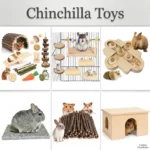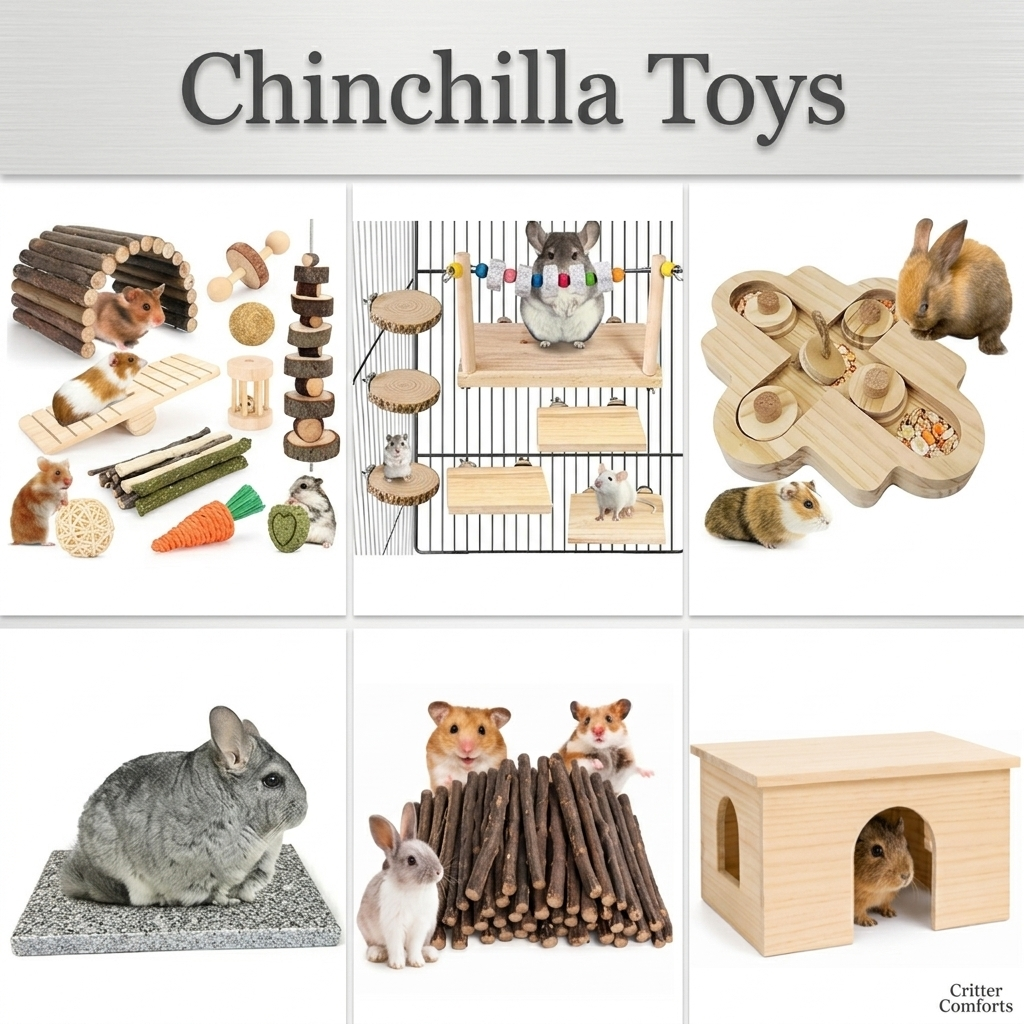
The best chinchilla toys are made from natural, untreated materials like apple wood, willow, pumice, and loofah. Because a chinchilla’s teeth never stop growing, safe chew toys are not optional. They are essential for dental health, and the right mix of toys also keeps your chinchilla mentally stimulated and physically active.
In this 2026 article, we cover 15 of the best chinchilla toys by category, five easy DIY toys you can make at home for almost nothing, and, just as important, the toys and materials you should never put in a chinchilla cage.
Why Do Chinchillas Need Toys?
Chinchillas are intelligent, high-energy animals that spend hours every day chewing, climbing, and exploring. In the wild, they wear their teeth down naturally on rough vegetation and rocks. In a cage, toys have to do that job.
There are three main reasons toys matter so much:
Dental health. A chinchilla’s teeth grow continuously throughout its life, up to 2-3 inches per year. Without constant chewing, teeth become overgrown, which leads to painful conditions like malocclusion. Chew toys are your first line of defense.
For more on this, see our guide on natural remedies for chinchilla dental health.
Mental stimulation. A bored chinchilla is a stressed chinchilla. Boredom can lead to fur chewing (barbering), bar biting, and other stress behaviors. Toys that involve foraging, tossing, and problem-solving keep their minds busy.
Physical exercise. Chinchillas in the wild can jump up to six feet. Ledges, platforms, and a proper wheel let them burn off that energy safely inside the cage.
If you are still deciding whether a chinchilla is the right pet for your home, our honest breakdown of chinchillas as pets: pros and cons is a good place to start.
Best Chew Toys for Chinchillas
Chew toys should make up the majority of the toys in your chinchilla’s cage. Here are the safest and most popular options.
1. Apple Wood Chew Sticks
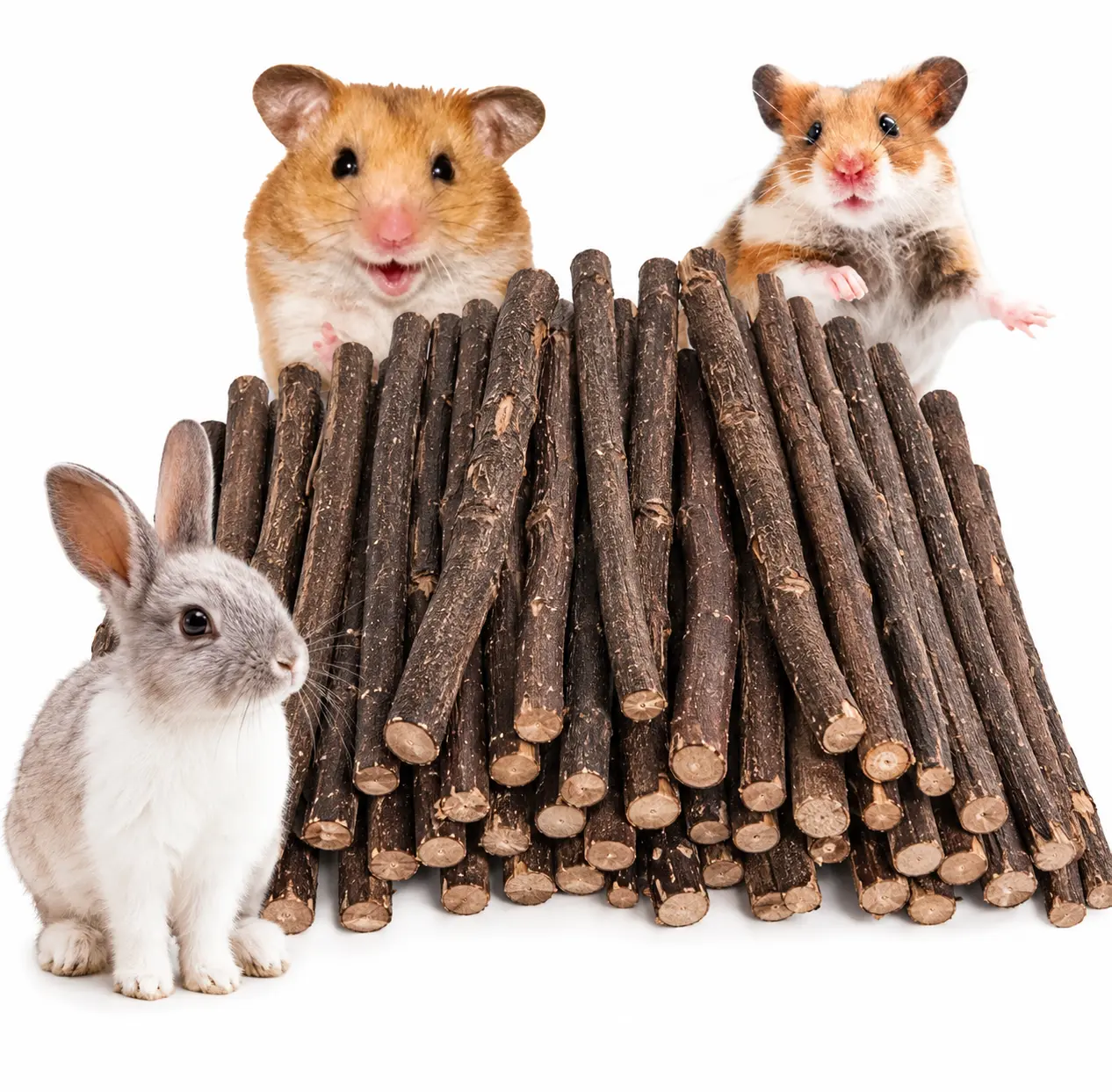
If you buy only one toy from this list, make it apple wood sticks. Apple wood is the gold standard of chinchilla chews: completely safe, hard enough to wear teeth down, and most chinchillas genuinely love the taste. Look for organic, pesticide-free sticks. They are inexpensive, so you can keep the cage stocked at all times.
Best for: Every chinchilla, every day. This is a staple, not an occasional treat.
2. Multi-Texture Chew Toys (“Perfect Chews”)
These combination toys mix wooden blocks, sisal rope, and loofah pieces on a single hanger. The variety of textures keeps chewing interesting, and the durability means they survive even the most determined chewers. The mix of materials also provides different levels of hardness, which is good for overall dental wear.
Best for: Chinchillas that get bored of single-material chews quickly.
3. Pumice and Lava Chew Blocks
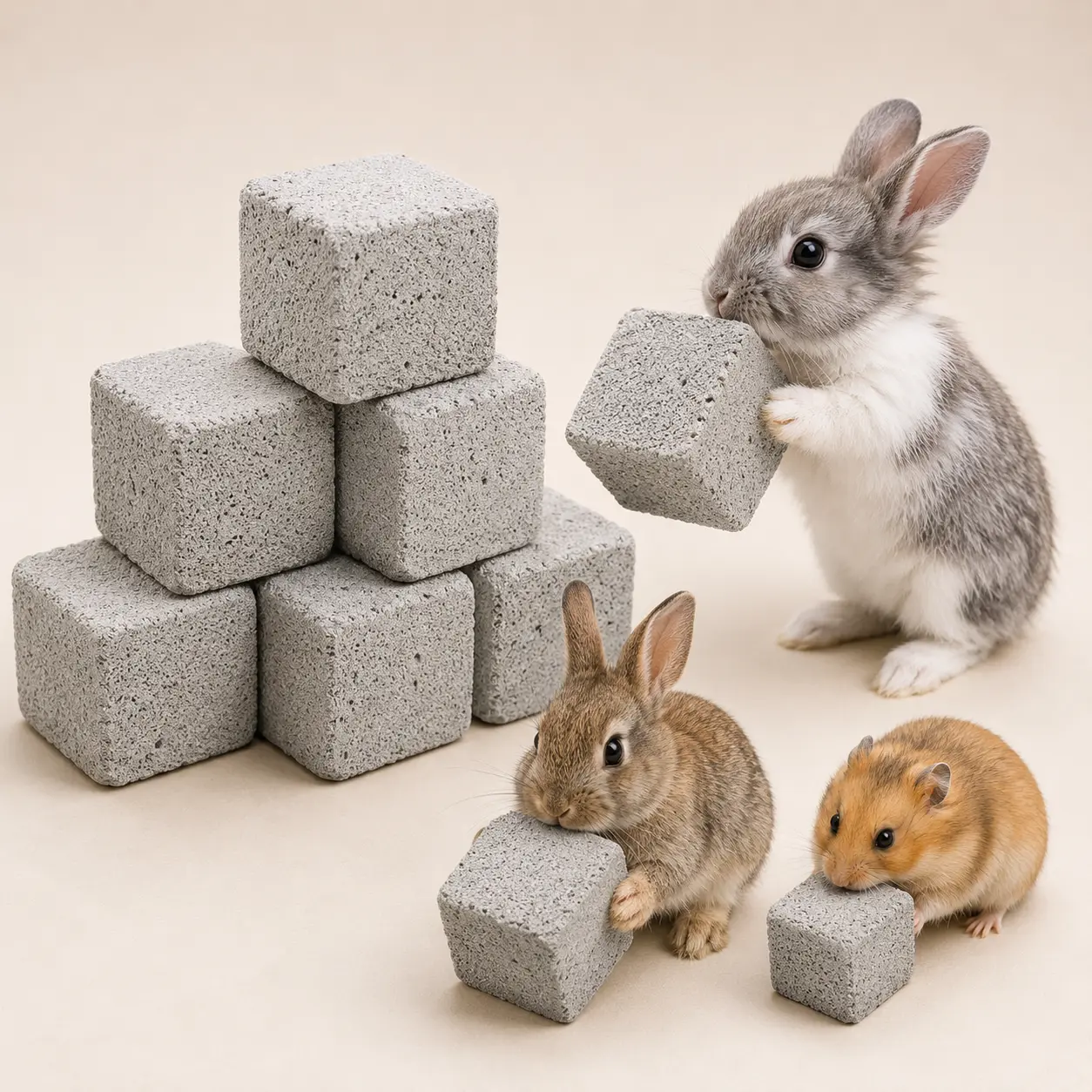
Pumice (often sold as “lava blocks” or “lava ledges”) is a natural volcanic stone that is soft enough to chew but abrasive enough to file teeth down effectively.
Many owners mount pumice ledges directly on the cage bars, so the block doubles as a perch. These blocks last longer than wood and give a completely different chewing texture.
Best for: Heavy chewers and dental maintenance.
4. Willow Balls and Rings
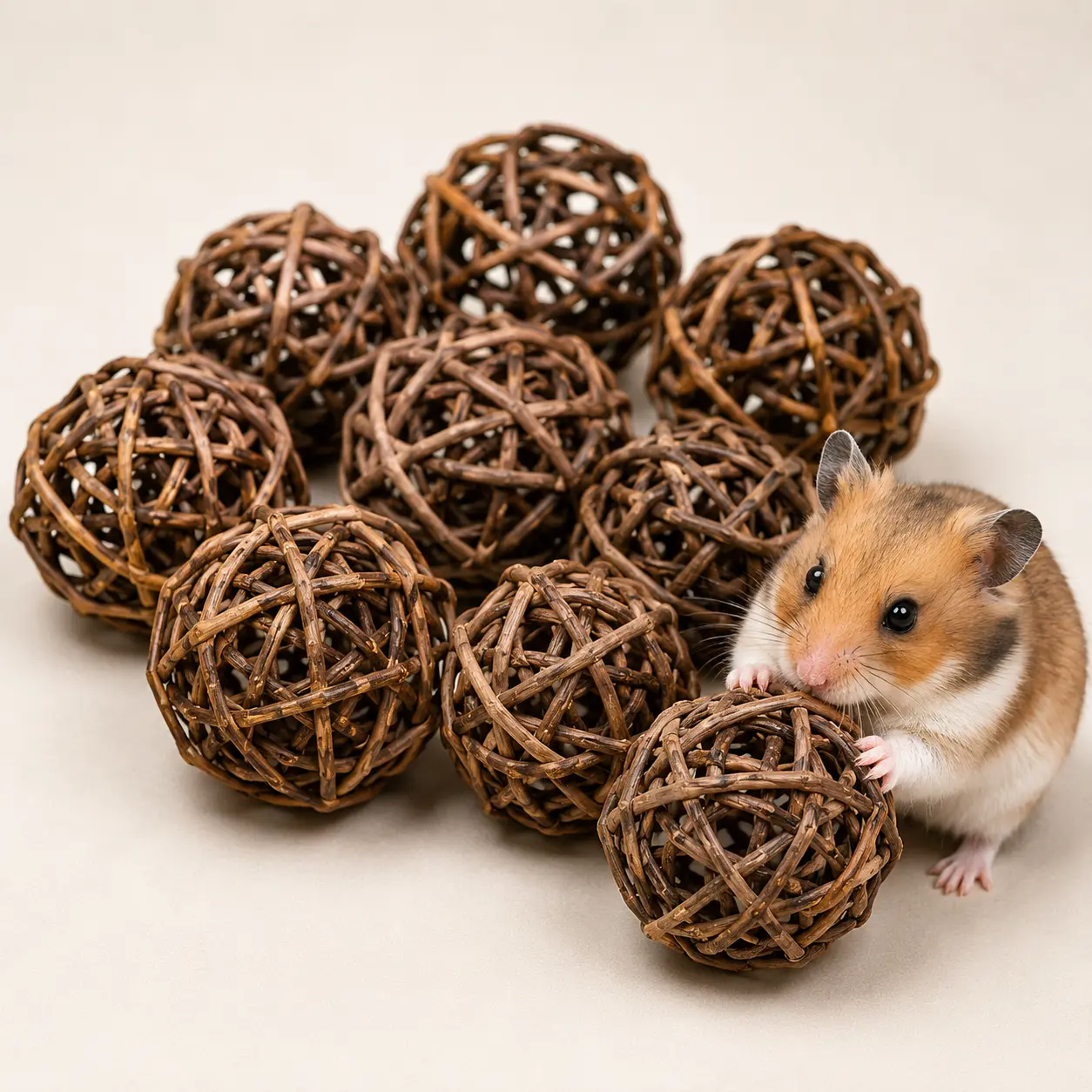
Woven willow balls are light enough to toss, roll, and carry around the cage, and the willow itself is fully edible and safe. Because the whole toy is chewable, there is nothing to worry about when it gets destroyed. Destruction is the point. Willow rings and tunnels offer the same benefits in different shapes.
Best for: Playful chinchillas that like to throw and carry their toys.
5. Nut Knot Nibbler
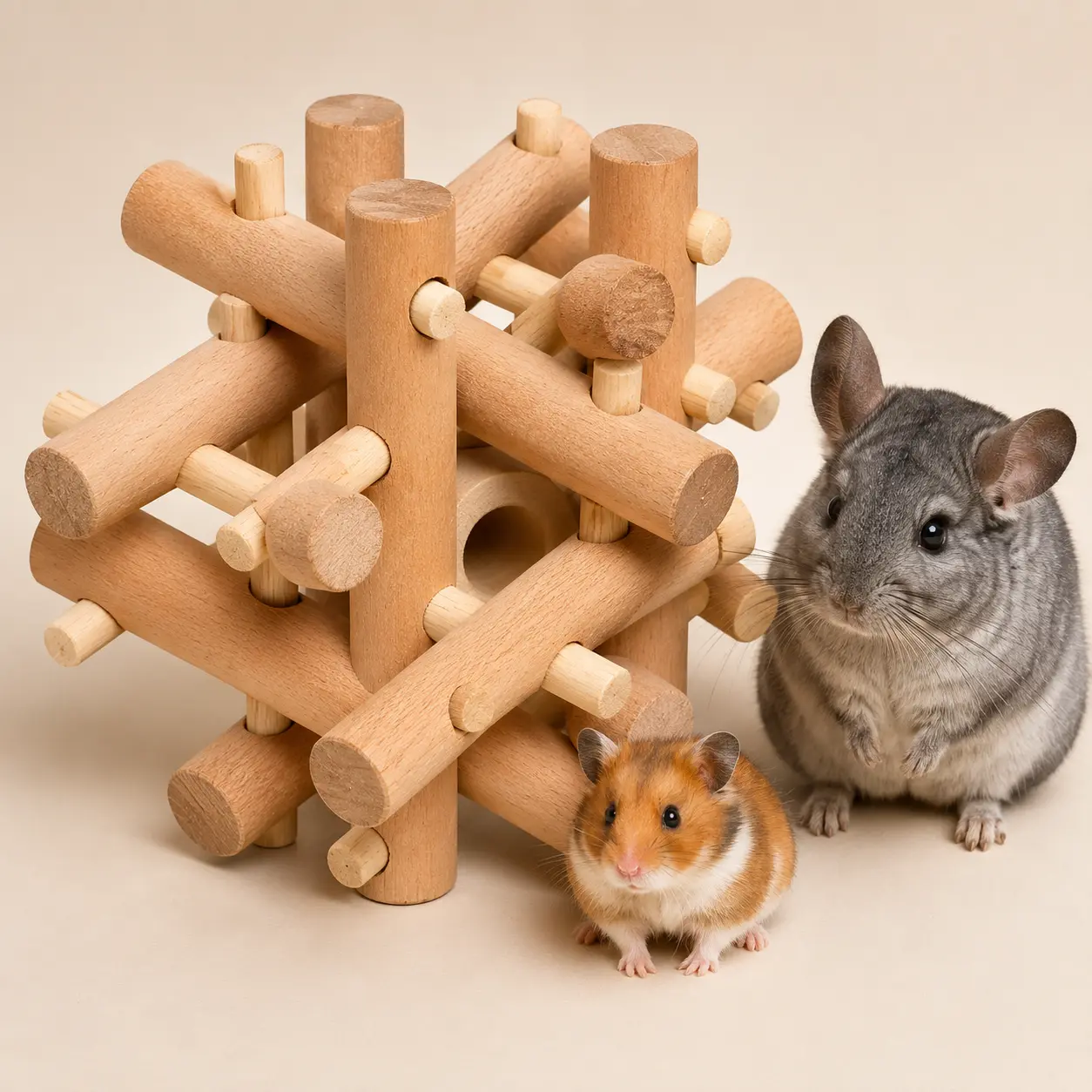
This classic toy hides a nut or seed inside a chewable wooden ball. Your chinchilla has to work through the wood to reach the reward, which combines chewing with foraging, two natural instincts in one toy. Just remember that the treat inside is exactly that, a treat, so this should not be an everyday toy.
Best for: Mental stimulation and occasional enrichment.
6. Hanging Lava and Wood Kabob
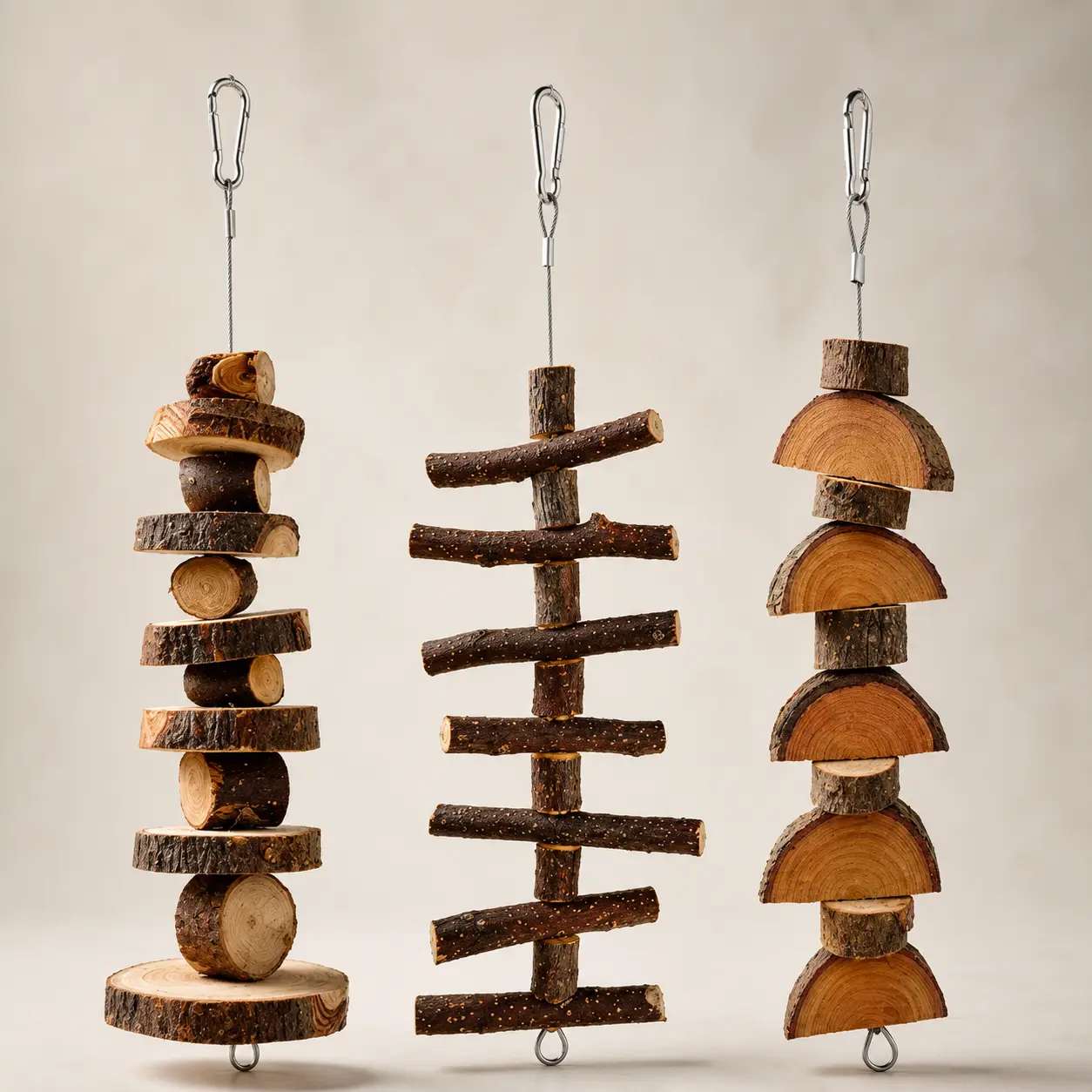
Kabob-style hanging toys thread wood pieces, pumice blocks, and loofah onto a metal skewer that hangs from the cage top. The hanging design makes your chinchilla reach and stretch to chew, adding light exercise to the chewing session. Many kabobs are refillable, so you can reload them with fresh wood pieces instead of buying a whole new toy.
Best for: Adding vertical interest to the cage and encouraging movement.
7. Loofah Chew Toys
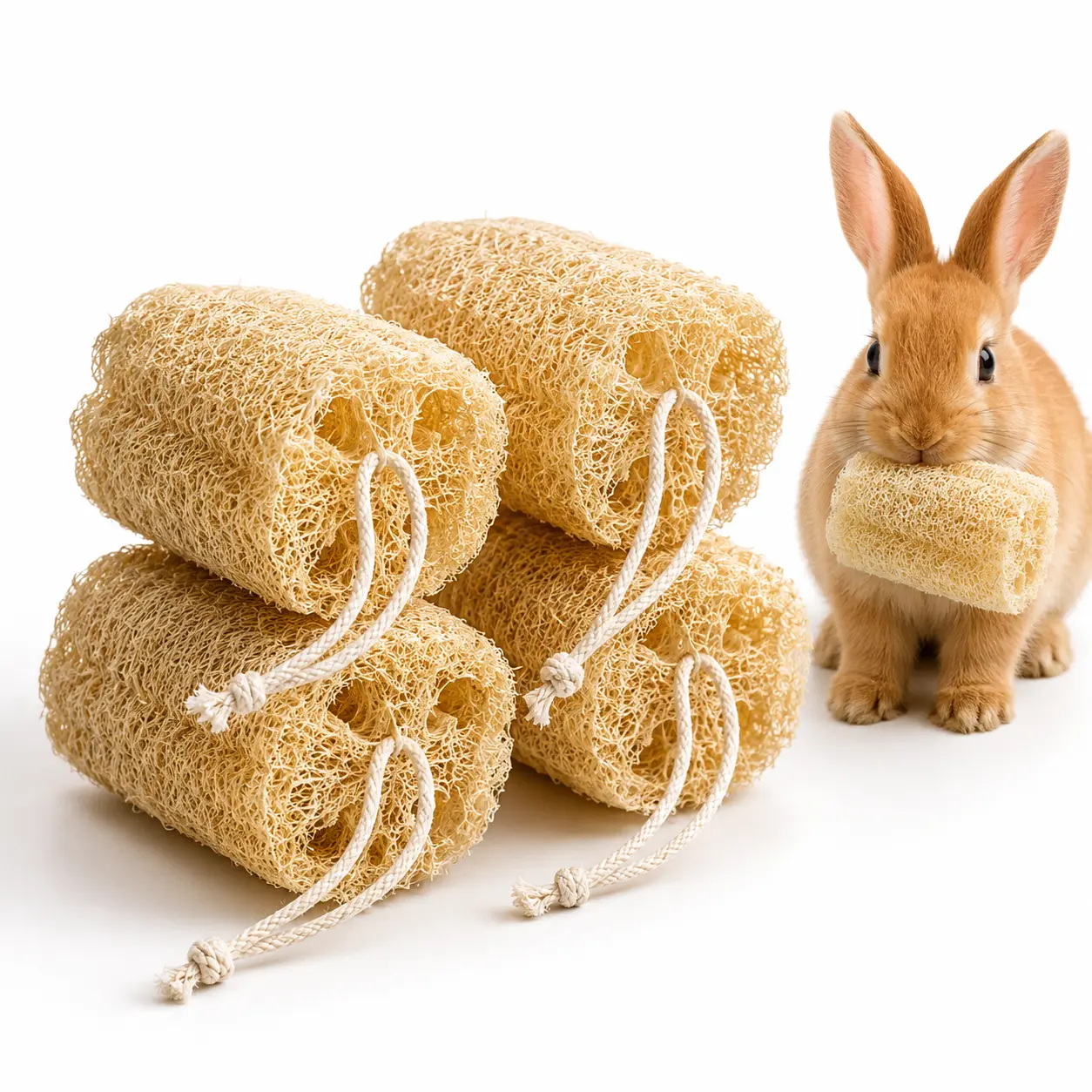
Natural loofah (dried gourd fiber) is soft, fully digestible in small amounts, and gives a completely different chewing sensation from wood or stone. Loofah toys get destroyed quickly, which chinchillas find deeply satisfying, so treat them as a consumable.
Best for: Variety, and gentler chewing for young chinchillas.
New chinchilla parents: see our complete guide to caring for baby chinchillas for age-appropriate toy tips.
Best Activity and Exercise Toys
8. A Proper Exercise Wheel (15 Inches or Larger)
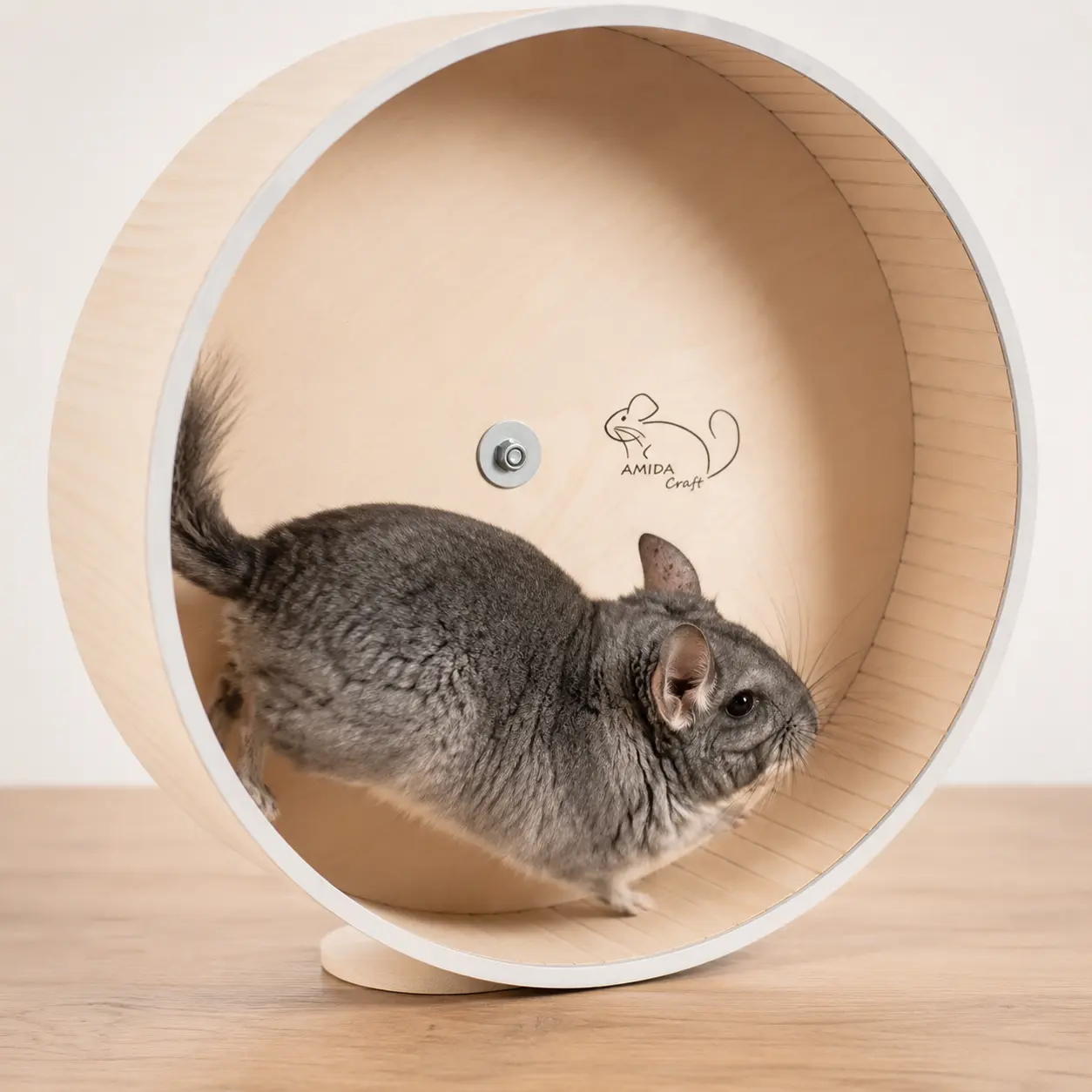
A wheel is one of the best investments you can make, but only the right kind. A chinchilla wheel must be at least 14-15 inches in diameter with a solid metal running surface. Small hamster-style wheels force the spine into an unnatural curve, and wire-rung wheels can catch feet and tails. Quality options like the Chin Spin or 15-inch solid metal wheels cost more, but they last for the chinchilla’s entire life.
Best for: Burning off energy safely, especially for chinchillas with limited out-of-cage playtime.
9. Woven Apple Toss Toys
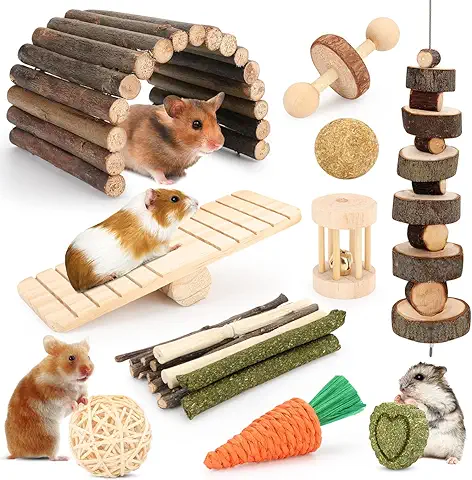
These small, apple-shaped woven toys are perfect for chinchillas that love to grab, toss, and chase objects. Made entirely from natural, chewable materials, they are safe to destroy and light enough for a chinchilla to pick up and throw, a behavior many owners find hilarious to watch.
Best for: Interactive floor-time play.
10. Wooden Ledges and Jumping Platforms
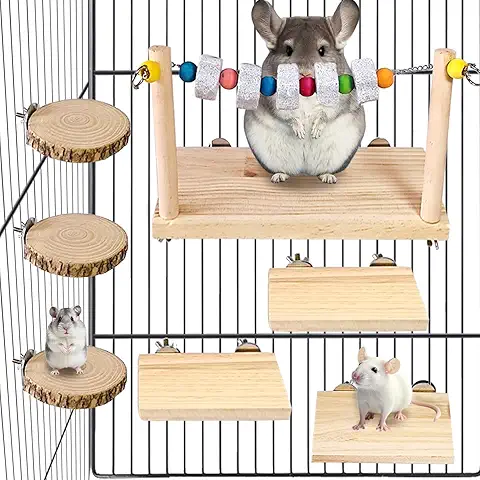
Chinchillas are vertical animals. A set of kiln-dried pine ledges mounted at different heights turns any cage into a climbing gym and lets your chinchilla express its natural jumping behavior. Ledges also double as chew surfaces and keep feet healthy (flat wood is much better for feet than wire flooring).
See our chinchilla cage setup ideas for how to arrange ledges safely so falls are never dangerous.
Best for: Every cage. Ledges are closer to essential equipment than toys.
11. Foraging and Treat Puzzle Toys
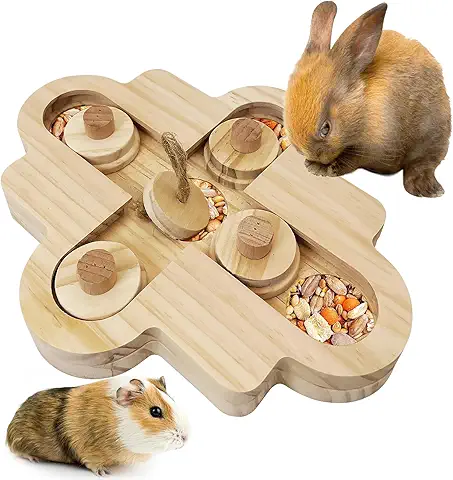
Foraging toys hide small amounts of hay or a single treat inside a chewable container, making your chinchilla work for its reward. You can buy woven foraging balls or hanging puzzle feeders. Foraging is one of the most effective boredom-busters because it occupies a chinchilla the way searching for food would in the wild.
Best for: Chinchillas that are left alone during the day.
12. Cardboard Tunnels and Tubes
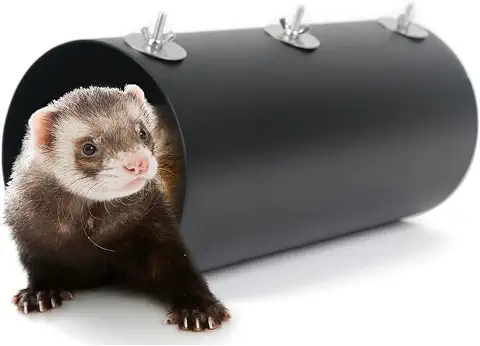
Plain, unprinted cardboard tubes and boxes make excellent tunnels for running through, hiding in, and shredding. Cardboard is safe in small chewed amounts as long as it is free of ink, tape, glue, and staples. Replace tubes once they are heavily chewed or soiled.
Best for: Budget-friendly enrichment and shy chinchillas that like cover.
Best Comfort and Enrichment Accessories
These last three are technically accessories rather than toys, but they contribute so much to daily enrichment that no toy list is complete without them.
13. Wooden Hideout Hut
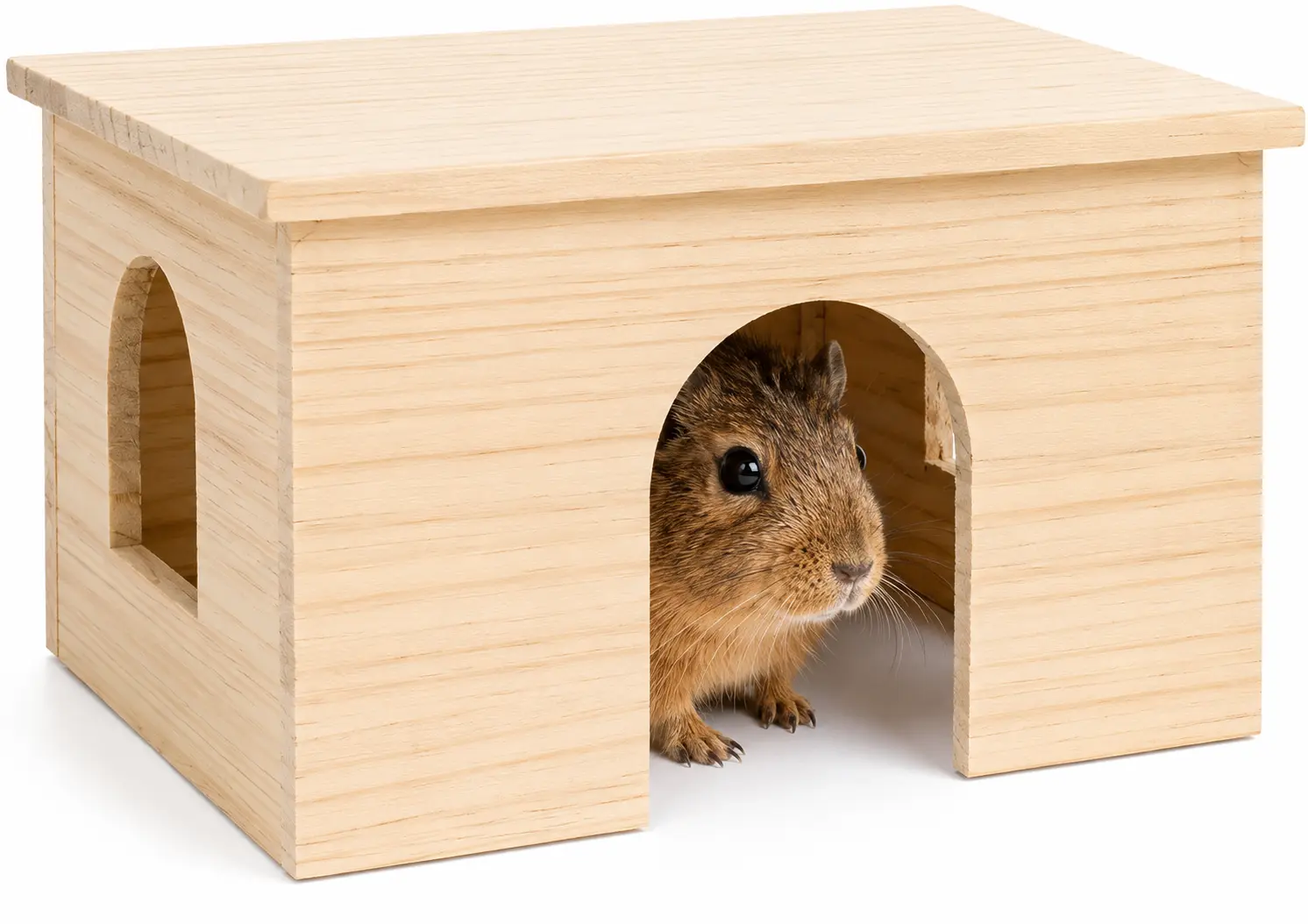
Chinchillas are crepuscular (most active at dawn and dusk) and need a private, enclosed space to sleep and de-stress during the day. A wooden hut made from untreated kiln-dried pine gives them security and doubles as a giant chew toy. Choose one large enough for your chinchilla to turn around in comfortably.
Best for: Reducing stress; essential for every cage.
14. Granite or Marble Chiller Stone
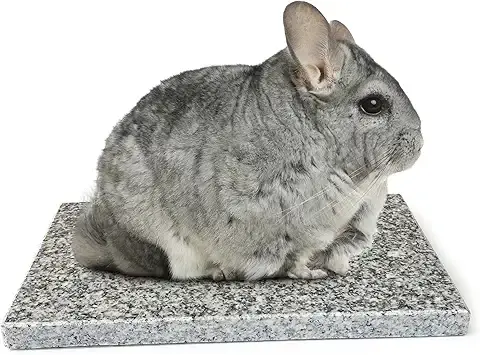
Chinchillas overheat easily. Anything above 75°F (24°C) becomes dangerous for them. A slab of natural granite or marble stays cool and gives your chinchilla a safe surface to sprawl on during warm weather. It is not a substitute for air conditioning in hot climates, but it adds real comfort.
Best for: Warm rooms and summer months.
15. Seagrass Mats
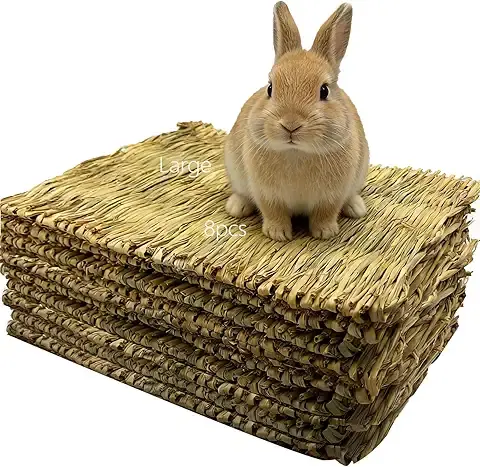
Woven seagrass mats serve double duty: a soft, chewable surface to rest on and a full-time shredding project. They are especially useful for covering plastic shelves (which should never be left exposed to chewing) and giving sore feet a break from wire surfaces.
Best for: Cage comfort plus safe chewing in one item.
5 Easy DIY Chinchilla Toys You Can Make at Home
You do not need to spend money to keep a chinchilla entertained. These homemade toys use materials you probably already have. Just make sure everything is clean, unscented, and free of ink, glue, and chemicals.
- Toilet Paper Roll Treat Puzzle. Take an empty cardboard tube (remove any leftover glue strips), stuff it loosely with timothy hay, and hide a single rosehip or plain shredded wheat piece in the middle. Fold the ends closed. Your chinchilla will shred the whole thing to reach the prize.
- Homemade Apple Branch Chews. If you have access to a pesticide-free apple, pear, or willow tree, cut small branches, scrub them clean, and bake them at 200°F (95°C) for 1-2 hours to dry them out and kill any organisms. Cooled branches are free, unlimited chew sticks.
- Paper Bag Hideout. A plain brown paper bag (no handles, no print) laid on its side becomes an instant crinkly cave. Chinchillas love diving in, hiding, and eventually shredding it.
- DIY Hanging Kabob. Buy a plain refillable metal kabob skewer once, then load it yourself with baked apple wood slices, plain cardboard pieces, and loofah chunks. This costs a fraction of pre-made hanging toys.
- Cardboard Box Maze. During floor playtime, connect two or three plain cardboard boxes with cut-out doorways to create a temporary maze. Rearrange it each session so it always feels new.
Chinchilla Toys and Materials to AVOID
This section matters more than any toy recommendation. The following items are unsafe for chinchillas; some are outright dangerous:
- Plastic toys of any kind. Chinchillas chew everything, and swallowed plastic fragments can cause fatal intestinal blockages. This includes plastic hamster toys, plastic huts, and plastic wheels.
- Exercise balls. Often sold for small pets, these are so dangerous for chinchillas that owners call them “death balls.” Chinchillas overheat rapidly inside them and can injure their spines and toes.
- Cedar and fresh pine wood. The aromatic oils (phenols) in cedar and untreated fresh pine are toxic to chinchillas and damage their respiratory system and liver. Only kiln-dried pine is safe.
- Cherry, plum, apricot, and citrus wood. Woods from stone-fruit and citrus trees contain compounds that are toxic to chinchillas.
- Painted, varnished, or glued wood. Any treated wood can poison a chewing chinchilla.
- Wire-rung wheels and wire balls. Feet, toes, and tails get caught and broken.
- Fabric with loose threads. Threads can be swallowed or wrap around limbs. If you use fleece, make sure it is tightly hemmed with no exposed edges.
- Small detachable parts. Bells, plastic beads, and small metal clips are choking and ingestion hazards.
Safe vs Unsafe Woods: Quick Reference
Safe woods: apple, pear (dried), willow, kiln-dried pine, aspen, hazelnut, manzanita, bamboo (untreated).
Unsafe woods: cedar, fresh pine, cherry, plum, apricot, peach, citrus, oak, walnut, redwood, and any treated, painted, or glued wood.
When in doubt, leave it out: apple wood and willow are cheap, proven, and universally safe.
How Many Toys Does a Chinchilla Need?
A good baseline is 4-6 toys in the cage at any time: two or three chew toys, one activity toy, one foraging toy, and a hideout. More important than quantity is rotation: swap toys in and out every week or two so the environment always feels fresh. A “new” toy that was simply hidden away for two weeks is just as exciting as one from the store.
Keep an eye on wear: replace wooden toys when they develop sharp splinters, and replace cardboard once it is soiled. Regular toy turnover also helps with cage hygiene, a big factor in keeping your chinchilla’s home fresh, as we explain in do chinchillas smell?
Final Thoughts
The right chinchilla toys do three jobs at once: they protect your pet’s teeth, keep its mind active, and give it an outlet for all that natural energy. Build your setup around safe chew toys (apple wood, pumice, willow), add one or two activity toys and a foraging option, and rotate everything regularly. Skip anything plastic, painted, or made from unsafe wood, no exception.
You do not need to buy everything on this list at once. Start with apple wood sticks, a pumice block, and one DIY toy from the section above, then build from there based on what your chinchilla actually enjoys. A few well-chosen toys and a weekly rotation will do more for your chinchilla’s happiness than a cage stuffed with forgotten ones.
Frequently Asked Questions
What toys do chinchillas like the most?
Most chinchillas favor natural wood chews (especially apple wood sticks), pumice blocks, and anything they can toss or shred, like willow balls and cardboard tubes. Every chinchilla has individual preferences, so offer variety and watch what your pet returns to most often.
Are cardboard toys safe for chinchillas?
Yes, plain cardboard is safe as long as it has no ink, tape, glue, staples, or glossy coating. Chinchillas will shred it and may swallow small amounts, which is harmless. Replace cardboard toys once they are heavily chewed or dirty.
Do chinchillas need an exercise wheel?
A wheel is not strictly required if your chinchilla gets daily supervised playtime outside the cage, but it is one of the best enrichment tools you can provide. If you buy one, it must be at least 14-15 inches in diameter with a solid (not wire) running surface.
How often should I replace chinchilla toys?
Replace chew toys when they are mostly consumed or develop sharp edges, cardboard items every one to two weeks, and rotate the remaining toys weekly to prevent boredom. Durable items like pumice ledges, wheels, and granite stones last for years.
Can chinchillas use hamster or rabbit toys?
Sometimes, but check the materials first. Wooden rabbit chews made from safe woods are usually fine. Avoid anything plastic, anything sized for smaller animals (like hamster wheels), and treated or dyed products.
Chinchillas have stricter safety requirements than most small pets. If you are comparing small pets, our chinchilla vs guinea pig guide covers the differences in detail.