An albino chinchilla is a chinchilla born without melanin, the pigment that gives fur, skin, and eyes their color. The result is a snow white coat paired with pink or red eyes. Here is the surprising part, though: true albinism is extremely rare in chinchillas. Most of the white, red eyed chinchillas sold as “albino” are actually a color mutation called Pink White, and knowing the difference matters for both buyers and owners.
In this guide, we cover what albino chinchillas really are, how to tell an albino from a Pink White, what they cost, the genetics behind the white coat, and exactly how to care for one.
What Is an Albino Chinchilla?
Albinism is a genetic condition in which the body cannot produce melanin. In chinchillas, this would mean pure white fur, pink skin, and red or pink eyes with no pigment at all. The condition is inherited, which means a chinchilla is born with it and carries it for life.
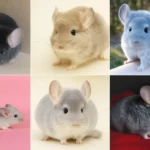
Chinchillas themselves are small rodents from the Andes Mountains of South America, famous for having the densest fur of any land mammal. In the wild, their natural coat is a bluish grey that blends into rocky mountain slopes. Every other color you see in pet chinchillas today, including white, beige, ebony, and violet, comes from mutations that breeders have developed over the last century. If you want the full picture of every coat color, see our complete guide to chinchilla colors.
Are Albino Chinchillas Real? Albino vs Pink White
This is the question most articles skip, and it is the most important one.
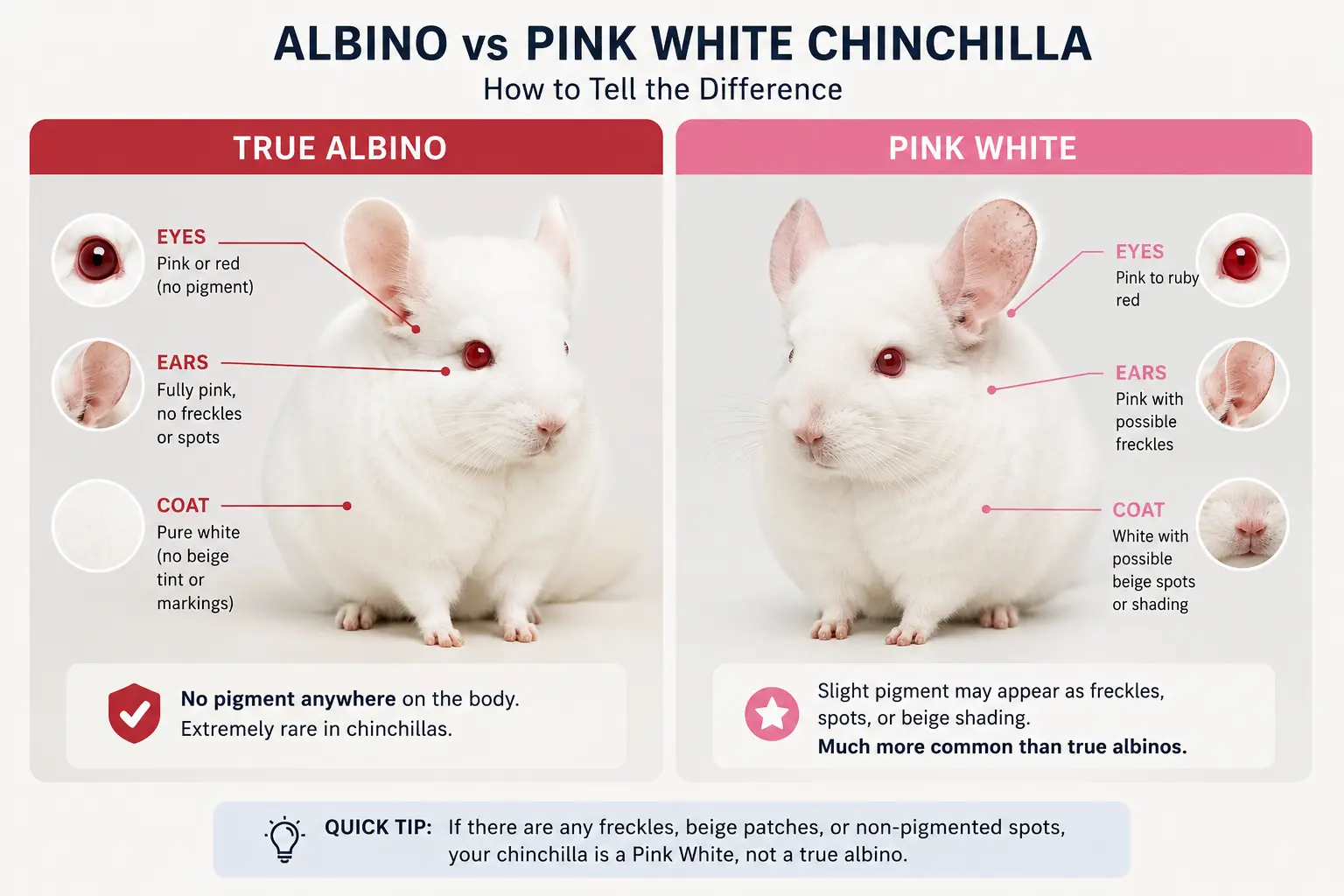
True albino chinchillas are extraordinarily rare. In practice, almost every “albino” chinchilla you will encounter at a breeder or pet store is a Pink White. A Pink White is produced by crossing the white mutation with the beige mutation. The combination gives the chinchilla white fur, pink ears, and pink or ruby red eyes, which is why it looks albino at first glance.
So how do you tell them apart? A useful rule of thumb:
- Pink White: white or mostly white coat, pink ears, pink to ruby eyes, and sometimes faint beige patches or freckles on the ears, nose, and paws. This is what you are almost certainly looking at.
- True albino: complete absence of pigment everywhere, with no freckles, no beige tint, and no dark markings of any kind. Genuinely rare in chinchillas.
For an owner, the difference is mostly academic. Both animals look similar and need identical care, including some extra thought about light sensitivity, which we cover below. For a buyer, the difference matters because a seller charging a premium for a “rare albino” is usually selling a Pink White, which is an established and reasonably available mutation.
White Chinchilla Varieties People Call “Albino”
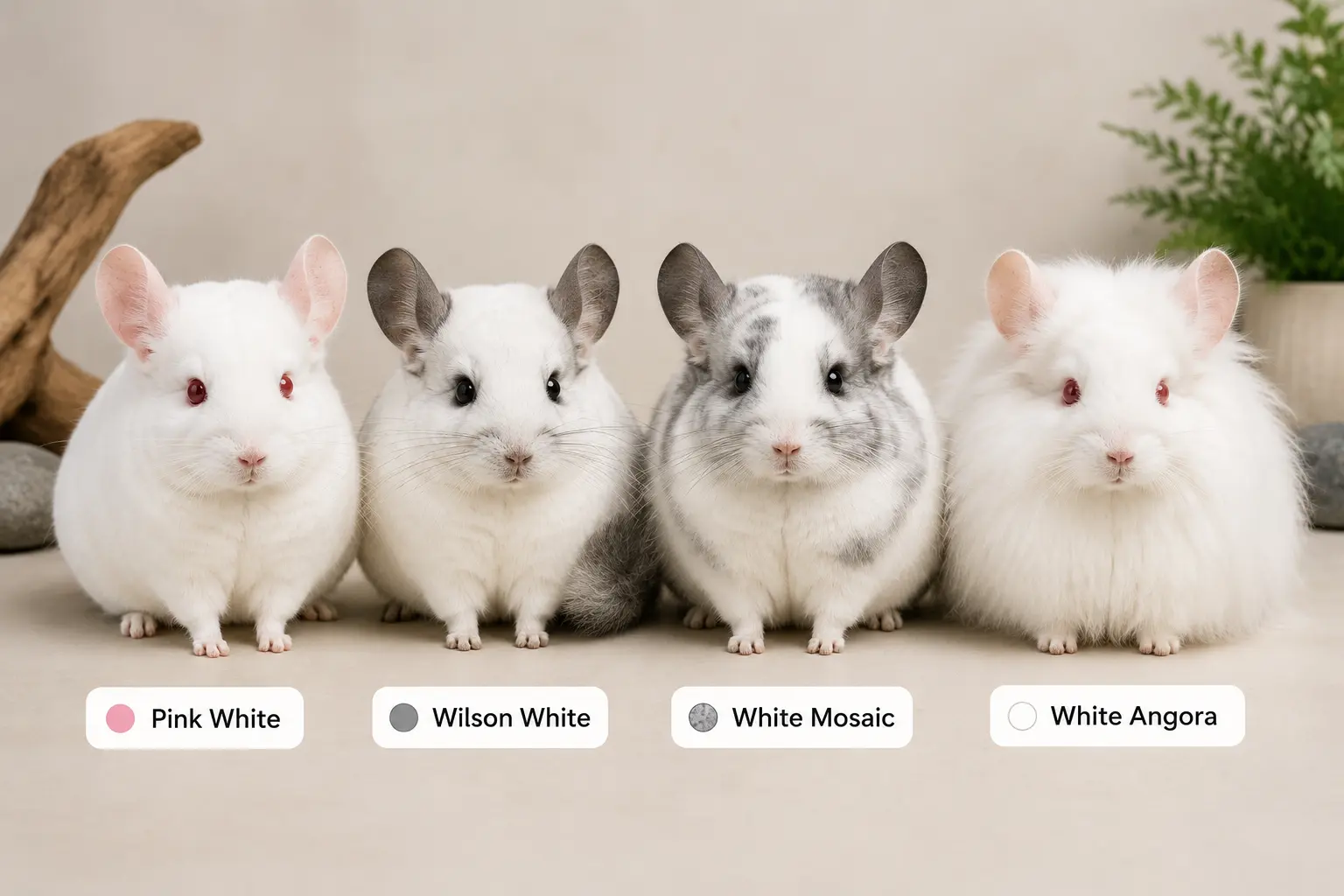
White chinchillas are not a separate breed. All pet chinchillas are the same species, and the differences between them are color mutations. These are the white varieties most often confused with albino:
Pink White. The white and beige cross described above. White coat, pink ears, red or pink eyes. This is the classic “albino looking” chinchilla.
Wilson White. A white chinchilla with dark eyes, grey ears, and often a grey tail or light grey markings. The dark eyes immediately tell you this is not an albino.
White Mosaic. A white coat splashed or marbled with grey patches. Mosaics are produced when the white mutation is combined with standard grey, and the pattern on every mosaic is unique.
White Angora (long haired white). Angora chinchillas carry a separate gene for long, silky fur. A white Angora combines that coat with a white mutation and is one of the most expensive chinchillas on the market. The long fur is a fur type, not a breed, and a white Angora with red eyes is still genetically a Pink White Angora rather than a true albino.
The Genetics, Explained Simply
You do not need a biology degree to understand where white chinchillas come from. Two genes do most of the work:
- The white gene is dominant, which means a chinchilla only needs one copy to show a white coat.
- The beige gene lightens the coat and gives pink ears and red toned eyes.
- A chinchilla that inherits both is a Pink White.
One important breeding fact: the white gene carries what breeders call a lethal factor. If a kit inherits two copies of the white gene, one from each parent, it does not survive. For this reason, responsible breeders never pair two white chinchillas together. The same is true for two velvet chinchillas. If you ever plan to breed, this is essential knowledge, and if you are buying, it is a good question to test whether your breeder knows their genetics.
How Much Does an Albino Chinchilla Cost?
Prices vary by region, breeder quality, and demand, but as a general guide in 2026:
- Standard grey chinchilla: roughly $80 to $150
- Pink White (“albino”) chinchilla: roughly $150 to $400
- White Mosaic: roughly $150 to $350
- White or Pink White Angora: $800 or more, sometimes well past $1,000
On top of the animal itself, budget for a quality cage, ledges, a wooden hideout, dust bath supplies, hay, and safe chew toys. Realistic setup costs usually land between $300 and $500 before you bring the chinchilla home. If you are still weighing the decision, our honest look at chinchillas as pets, pros and cons covers the full commitment.
A quick buying tip: be cautious with any seller marketing a “rare true albino” at an inflated price. Ask whether the animal is a Pink White. A knowledgeable breeder will answer immediately; a hesitant one is a red flag.
How Rare Are Albino Chinchillas?
True albinos are among the rarest chinchillas in existence. Pink Whites, on the other hand, are uncommon but well established, and most dedicated chinchilla breeders can produce them.
So if your goal is simply a white chinchilla with red eyes, you will be able to find one. If your goal is a scientifically confirmed true albino, expect a long search.
Do Red Eyes Affect Their Vision? Light Sensitivity Care
Red and pink eyes lack the pigment that helps filter light, so albino and Pink White chinchillas are generally more sensitive to bright light than dark eyed chinchillas.
They are not blind, and they navigate perfectly well, but you can make their life more comfortable with a few adjustments:
- Place the cage away from direct sunlight and harsh overhead lighting.
- Provide shaded areas inside the cage, such as a wooden hideout and covered ledges.
- Remember that chinchillas are crepuscular, most active at dawn and dusk, so dim, calm lighting suits their natural rhythm anyway.
None of this requires special equipment. It simply means being a little more thoughtful about cage placement than you might be with a standard grey.
Caring for an Albino Chinchilla
Beyond light sensitivity, an albino or Pink White chinchilla needs exactly the same care as any other chinchilla. Here are the essentials.
Diet
Unlimited high quality grass hay, such as timothy hay, should make up the bulk of the diet. Hay keeps digestion moving and grinds down constantly growing teeth.
Add a measured portion of plain, high quality chinchilla pellets, and skip mixes that contain nuts, seeds, and dried fruit, which are far too sugary and fatty.
Fresh water should always be available from a sipper bottle, which stays cleaner than a bowl.
Cage and Environment

Chinchillas are jumpers, so a tall cage with multiple levels beats a wide, flat one. Fit it with kiln dried pine ledges at different heights, a wooden hideout for sleeping, and plenty of safe chewing options. Our chinchilla cage setup ideas walk through a full arrangement, and our updated guide to the best chinchilla toys covers which toys are safe and which materials to avoid.
Temperature
This is the single most important care rule for any chinchilla. Their dense fur means they overheat easily, and temperatures above 75°F (24°C) become dangerous.
Keep the room between 60 and 70°F (15 to 21°C), and never place the cage near a heater, a sunny window, or a humid room.
Dust Baths
Chinchillas never bathe in water. Instead, they roll in fine volcanic dust two to three times a week, which pulls oil and moisture out of their dense coat.
Offer the dust bath for ten to fifteen minutes per session, then remove it so the dust stays clean. A white coat shows dirt more visibly than grey, so regular dust baths matter even more for albino and Pink White chinchillas.
Dental Health
A chinchilla’s teeth grow continuously for its entire life. Unlimited hay plus safe wooden chew toys are the everyday defense against overgrown teeth and painful malocclusion. For more depth, see our guide to chinchilla dental health.
Health Monitoring
Chinchillas hide illness instinctively, so watch for quiet warning signs: eating less, smaller or fewer droppings, low energy, drooling, or overgrown looking front teeth.
Find a vet with exotic pet experience before you ever need one, and schedule a checkup once a year.
Lifespan: Do Albino Chinchillas Live as Long?
Yes. The white coat and red eyes do not shorten a chinchilla’s life. With proper care, albino and Pink White chinchillas live 10 to 20 years, the same as any other chinchilla.
That long lifespan is one of the biggest commitments of chinchilla ownership, so make sure the whole household is on board before buying.
Bonding With an Albino Chinchilla
Chinchillas are prey animals, so trust is earned slowly. Start by spending time near the cage, talking softly, and offering an occasional treat from your hand. Move slowly, avoid grabbing from above, and let the chinchilla come to you.
Many chinchillas never love being held but genuinely enjoy chin scratches, shoulder rides, and supervised playtime outside the cage in a chinchilla proofed room.
If you are raising a young one, handling routines are slightly different in the first weeks. Our baby chinchilla care guide covers age appropriate handling and socialization step by step.
Final Thoughts
The white chinchilla with ruby eyes that most people call an albino is almost always a Pink White, a beautiful and well established color mutation rather than a rare genetic anomaly. Whichever name it goes by, it is the same gentle, energetic, long lived animal as every other chinchilla, with one small extra need: a bit of shade for those sensitive eyes.
If you are considering one, buy from a breeder who can explain the genetics honestly, prepare a cool and spacious cage before the chinchilla arrives, and commit to the ten to twenty year journey. Do that, and an albino chinchilla makes an unforgettable companion.
Frequently Asked Questions
Are albino chinchillas blind?
No. Their red or pink eyes are more sensitive to bright light, but they see well enough to jump, climb, and navigate confidently. Keep their cage out of direct sunlight and they will be perfectly comfortable.
Are all white chinchillas albino?
No. Most white chinchillas are mutations such as Wilson White, White Mosaic, or Pink White. Only a chinchilla with a total absence of pigment, which is extremely rare, is a true albino. If the chinchilla has dark eyes or any grey markings, it is not albino.
How much does an albino chinchilla cost?
A Pink White chinchilla, the variety usually sold as albino, typically costs between $150 and $400 depending on the breeder and region. Long haired white Angoras can cost $800 or more.
Are albino chinchillas harder to care for?
Not really. They need the same diet, cool temperatures, dust baths, and chew toys as any chinchilla. The only extra consideration is keeping their cage away from bright, direct light because of their sensitive eyes.
How long do albino chinchillas live?
With good care, 10 to 20 years, exactly the same as other chinchillas. Albinism and the Pink White mutation do not reduce lifespan.